L’ansia: un segnale, non una punizione
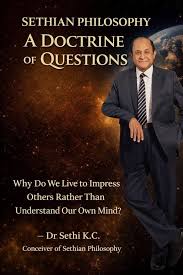
di Krishan Chand Sethi
Il fatto è che tendiamo costantemente a muoverci nella nostra vita senza fermarci nemmeno a riflettere su ciò che si cela sotto le nostre azioni. I giorni passano, il lavoro viene svolto, i doveri sono compiuti, e sotto questo apparente movimento calmo esiste una lieve inquietudine, esiste un disagio. Non è necessariamente rumoroso o travolgente. Non sempre è qualcosa di più di una semplice inquietudine, un’impazienza silenziosa e inspiegabile. È questa emozione che chiamiamo ansia.
E quasi istintivamente la trattiamo come qualcosa che deve essere eliminato, come se fosse un fastidio per la vita, una distrazione che non ci permette di funzionare al meglio delle nostre capacità. Ma cosa accadrebbe se non fosse un’interruzione? E se, invece, fosse in verità una maggiore vicinanza alla vita stessa, una prossimità che ne fa parte integrante, che risponde a una realtà dentro di noi, una realtà che desidera essere percepita?
Gli esseri umani hanno sempre avuto bisogno di certezza. Sviluppiamo rituali, coltiviamo abitudini e costruiamo sistemi che ci fanno sentire in controllo. Queste tendenze ci offrono conforto e stabilità in un mondo altrimenti instabile. Tuttavia, nel farlo, ci allontanano dall’incertezza naturale che la vita inevitabilmente possiede. Iniziamo a confondere il controllo con la sicurezza, e la familiarità con il significato.
In un’esistenza così ordinata, tutto ciò che minaccia il nostro senso di controllo viene visto come un avversario.
La paura, quindi, non si presenta come una guida, ma come un intruso. E così, la resistiamo. Cerchiamo di soffocarla con distrazioni, la seppelliamo in un’attività incessante, la attenuiamo con la ragione e tentiamo di sfuggirle gettandoci in un movimento continuo e incontrollato. Ci diciamo che questo calmerà la mente, che la voce dell’inquietudine può essere sommersa dalla cosiddetta “occupazione”. Ma, nonostante tutto, essa ritorna,talvolta dolcemente, come un sussurro; talvolta con violenza, come una tempesta, ricordandoci che dentro di noi c’è qualcosa che non è stato ancora scoperto, risolto o riconosciuto.
È un errore considerare l’ansia solo come un problema.
Non è una punizione. Non è un difetto del tuo cuore. Non è una condanna inflitta alla tua esistenza. È, piuttosto, un invito, sottile ma costante, a fermarsi, a guardarsi dentro, ad ascoltare con maggiore attenzione di quanto siamo abituati a fare. Indica che nella tua vita c’è qualcosa che attende di essere riconosciuto, una verità che chiede di essere vista, un percorso che necessita di essere ripensato. Forse ti sta conducendo verso una vita che non stai vivendo pienamente, un’emozione che non hai ancora accolto, o una scelta che continui a rimandare.
Una tale consapevolezza raramente è confortevole. Quando iniziamo a mettere in discussione i nostri schemi, le nostre decisioni, e persino ciò che siamo, tendiamo a tremare. Il familiare diventa incerto, e il terreno su cui poggiano le nostre convinzioni sembra meno solido di quanto credessimo. Ma questo tremore non è debolezza, è l’apertura degli occhi. È il momento in cui la mente comincia a vedere oltre i propri schemi condizionati.
È la comprensione che la vita non è predeterminata, che non siamo soltanto il risultato del nostro passato e che il cambiamento, per quanto incerto, è sempre possibile.
Ma alla possibilità si accompagna la responsabilità. Essere consapevoli della libertà di scegliere è allo stesso tempo liberante e gravoso. Richiede consapevolezza, coraggio e la disponibilità ad affrontare l’ignoto. È molto più facile restare nel familiare che avventurarsi nell’incertezza. E così, la mente esita. Crea risultati immaginari, paure inesprimibili e narrazioni inquietanti, tutte tradotte nella forma dell’ansia.
In questo modo, la nostra libertà è profondamente legata all’ansia. Non nasce soltanto perché qualcosa non va, ma perché qualcosa è aperto, perché la vita non è predeterminata e noi partecipiamo alla sua creazione. L’ansia, quindi, non è solo paura; è l’eco della possibilità. Attraversando queste riflessioni, non considerarle come problemi da risolvere immediatamente. Questo non è un percorso per eliminare l’ansia, né un modello per definirla. È, piuttosto, un invito a vederla in modo diverso. Ad ascoltare invece di combattere, a osservare invece di reagire, a comprendere invece di reprimere.
Accogli questi pensieri senza fretta. Non è necessario affrettarsi ad approvare o rifiutare. Permetti a ogni idea di incontrare la tua esperienza. Ci saranno momenti in cui ti sentirai compreso, e altri in cui proverai disagio. Entrambi sono essenziali. Anche la sofferenza può diventare fonte di comprensione più profonda, poiché è spesso attraverso il turbamento che nasce la chiarezza.
Con pazienza, potrai iniziare a osservare un cambiamento.
Ciò che sembrava insormontabile può iniziare ad acquisire senso. Ciò che appariva come un peso può trasformarsi in una guida. L’intensità può attenuars, non perché smetti di sentirla, ma perché cambia il tuo rapporto con essa. Non la stai più resistendo, la stai ascoltando.
Questo cambiamento non avviene per forza, ma attraverso la consapevolezza. E la consapevolezza è una forza silenziosa. Non impone la trasformazione, ma la permette. Non fornisce risposte immediate, ma le rivela nel tempo.
Pertanto, questo non è un viaggio per eliminare l’ansia, ma per conoscere più profondamente te stesso. È un passaggio dalla reazione alla riflessione, dalla paura all’indagine, dalla resistenza all’accettazione. È imparare a stare con il proprio mondo interiore senza cercare immediatamente di cambiarlo.
Questo non è un libro da leggere in fretta. Portalo con te, non come una guida, ma come un dialogo con te stesso. Tornaci quando emergono domande, e lascialo quando il silenzio è più autentico delle parole. Che ti accompagni, non che ti istruisca.
Perché, in fondo, non si tratta soltanto di ansia.
Si tratta dei segnali sottili che modellano la tua vita interiore, dei modelli invisibili che guidano il tuo comportamento, e della voce dentro di te che desidera essere ascoltata. Si tratta di ristabilire un rapporto con te stesso basato non sul controllo, ma sulla comprensione. E forse, imparando davvero ad ascoltare quella voce, potrai arrivare a comprendere. Non eri destinato a essere imprigionato dall’ansia. Essa era destinata a risvegliarti.
Dr. Sethi K.C. – AutoreDaman, India – Auckland, Nuova Zelanda
Anxiety A Signal, Not A Punishment.
The fact is that we constantly tend to move in our life without stopping even to think about what is under our actions. Days, work, duties are accomplished, and under this apparent calm movement there is a faint uneasiness–there is discomfort. It does not necessarily sound loud and overpowering. Not always is it much more than an unease, an impatience that is silent and inexplicable.
It is this emotion which we refer to as anxiety.
And nearly instinctively we deal with it as though it were something that must be removed–as though it were an annoyance to life, a distraction that does not allow us to work to our full capacity. But how about when it is not an interruption? And what, then, if it is, in truth, a closer closeness to life itself–a proximity that is a part and parcel, and answering to a fact inside of us, a fact that wants to be perceived?
There has always been a need of certainty among human beings. We develop rituals, develop habits and develop systems that make us feel in control. These trends bring us comfort and stability in the otherwise volatile world. However, in the process, they make us too much alienated to the natural uncertainty that life must have. We start confusing domination with safety, and familiarity with meaning.
In such ordered being, whatever threatens to cut down our sense of control is viewed as an adversary.
Fear is therefore not presented as a guide, it is an intruder.
And so, we resist it.
We attempt to drown it out with distractions, we bury it in ceaseless activity, we deaden it with reason, and we get away with it by throwing ourselves into unrestrained movement. We tell ourselves that this is going to make the mind quiet down, that the voice of worry can be drowned by the (so-called) busyness. But, everything notwithstanding, it comes back, either softly, as a whisper; or violently, as tempest; and it reminds us of the fact that there is something in us which is undiscovered, or unresolved, or unrecognized.
It is a mistake to think of anxiety as a problem only.
It is not a punishment. It is not a vice in your heart. It is not a sentence dictated to your existence. It is, however, an overture, a faint, but continuous, appeal–to wait, to look inward, to listen more attentively than we are used to.
It is an idea that there is something in your life that needs to be accepted, there is something that needs to be known as fact, there is the way that needs to be re-thought. Maybe, it is leading to a life that you are not living fully, an emotion that you have not been acknowledging, or a choice that you have been putting off.
Such consciousness is hardly comfortable.
When we start doubting our patterns, our decisions, we even start doubting who we are, we tend to tremble. The old turns into something unknown, and the ground on which we base our beliefs seems not as solid as we thought. This shaking is not weakness, but the opening of the eyes. It is the time when the mind starts to realize something that its conditioning patterns did not imply.
It is the understanding that life is not predetermined, we are not purely what we are because of the past and that change, though we cannot be sure of, is always open to us.
But there must be responsibility to possibility.
It is freeing and loaded to be aware of the freedom to make a choice. It requires consciousness, boldness and readiness to confront the unknown. Staying in the familiar rather than taking the risk of the unknown is much easier. And so, the mind hesitates. It forms imaginary results, unspoken anxieties, and troubled accounts all which translate into anxiety.
Through this, our freedom is closely related to anxiety.
Not only that something is wrong, but that something is open, because life is not predetermined, and that we are a part of creating it. Anxiety is not fear, though it is the reverberation of possibility.
Passing through these reflections, do not take them as problems to be solved now. This is not a road map to get rid of anxiety, or a model that can be used to characterize it. Rather, it is a beckoning, to see it in a different way. To hear and not fight, to see and not to respond, to learn and not to repress.
Get these thoughts into you without haste. One does not have to hurry to concur or dissent. You know, you have to allow every thought to be in touch with your experience. There are moments when you might feel understood; there are moments when you will be in an uncomfortable state. Both are essential. Even suffering may serve as the source of greater understanding, as it is so easy to begin to see something clear because of the disturbance.
Being patient, you can start observing a change.
What seemed insurmountable can start to have sense. The baggage that appeared to be a burden might eventually turn out to be a guide. The intensity can calm down, it is not that you no longer feel it, but your relationship with it is different. And you are not resisting it any longer–you are listening to it.
This is a change that is not effected by coercion, but rather awareness.
and consciousness is a silent force. It does not require transformation, it permits it. It does not give answers, it opens them as time goes by.
Therefore, it is not a trip of eradicating anxiety but of learning more about yourself. It is an action in response to reflection, inquiry, and acceptance in the place of resistance. It is about knowing how to sit with your inner world and not trying at once to change it.
This is not a book to be rushed. Not as a guide but as a dialogue with yourself, bear it with yourself. Go back to it as need be, and forsake it when silence is more real than language. And follow you, not teach you.
It is not about anxiety after all.
It is concerning the barely visible cues that define your innerbeing, the unheard patterns that control your act, and the voice inside you that desires to be heard. It is the re-establishing of a connection with yourself which is not that of control, but of understanding.
And might even in coming to hear that voice right, you come to know–
You were not meant to be locked up in anxiety.
It was meant to awaken you.
Dr Sethi K.C.
Author,
Daman, India
Auckland ,New Zealand