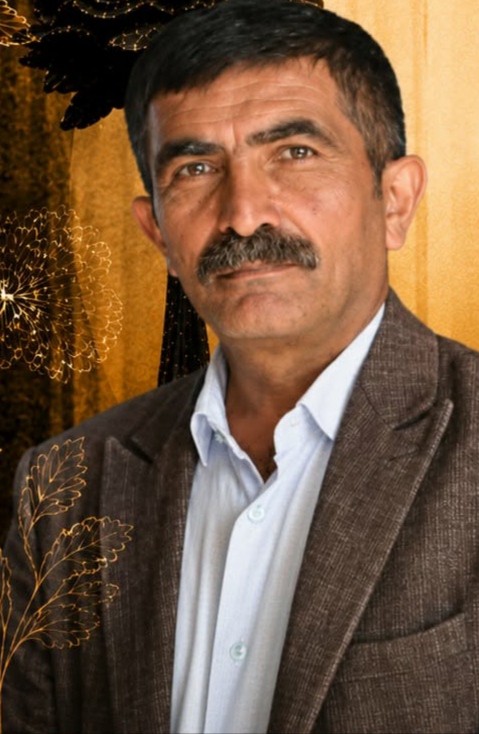
Bahtiyar Hidayet, Azerbaijan. Biographiya and poems
Insults, torture, indigence
Are locking one’s throat
So whatever you eat
Doesn’t go through
Here the light of government does not go out
Here the light of fate goes out
The light is imprisoned here
There is no peace day or night
Light is the prisoner of darkness
And inmates die
like a moth attracted to light
There are news from home
Government cut the power
There is light in here, darkness at home
the country has become a prison
If I get free one day
I have to take light back
In return for the food parcels
Coming from home
The country is in darkness
You end up in prison
if you follow lead of light
so we have to follow the other side
where dogs bark
Because there is a tragedy
where light comes from
2
Highway
Billboards on the roadside—
2 km to such-and-such restaurant,
3 km to such-and-such gas station,
5 km to such-and-such village, and so on.
And the portraits of martyrs.
But beside those portraits,
A device that can measure
The distance to eternity—
Has yet to be invented.
3
Curse me, beggar.
–
Oh, beggar woman,
Don’t pray for me.
If your prayers had any power,
you wouldn’t be a beggar yourself.
Curse me if you can.
–
Because I’m in a worse situation than you.
My salary ran out in four days.
Loans, fines, taxes, weddings, medical treatment – that’s it.
–
Now I don’t even have the money I had.
Unfortunately, there’s no place to beg –
every place already has its own beggar.
–
It’s the big, big beggars who have put us in this beggarly situation:
this is bribery, this is corruption
–
Look at the bird market opposite.
There’s grain in front of the chickens in the cage,
and the free sparrows are running towards those cages.
Look – I’m in the same situation as those sparrows.
Happy swallows and cranes have fled this land.
–
But I have hope.
In the neighbor’s yard,
I will mow the grass.
–
Curse me, beggar woman.
Curse me, let my Azrael come.
Let Azrael come with a sickle in his hand.
Let him help me a little –
I will mow the grass in the neighbor’s yard.
4
War Memories
–
A yellow horse came to the village from somewhere.
People used it for hard work.
It had become so thin that
You could count its ribs.
… Then the war began.
The yellow horse was left without an owner.
It retreated to the forests, became wild,
And became very fat.
Its neighing was like thunder.
In short, the war had been favorable for it.
–
The village had been deserted.
The chickens had gone wild, and so had the geese.
The dogs had gone wild.
They were hunting mice in the fields and frogs in the river.
And the war had been favorable for them.
–
The gardens were not cultivated.
The plants had gone wild.
The fruits tasted like forest fruits.
–
The bees had gone wild.
Bee colonies had moved into the forests.
–
People had gone wild.
People were killing each other.
The war was also convenient for some people.
Only they were civilized:
Ironed shirts, ties, etc.
They were the ones who caused the war.
–
After the war, those civilized people
established businesses for themselves.
They held high positions.
–
I knew one of them.
His name was Valik.
During the war, he traded in corpses.
After the war, he became the owner of hotels and restaurants.
In his hotels, he began to trade in women.
He distributed horse meat to people in his restaurant.
–
Perhaps, for the freedom of that yellow horse,
For the freedom of geese, chickens, dogs, bees, plants,
He could be forgiven.
But in his restaurant
He distributed horse meat, goose meat, chicken meat, honey.
It turned out that he had no love for nature either.
–
But nature had a love for him:
Leaving a huge fortune to his children,
One day Valik died in a civilized manner.
Now one son would run the restaurant,
And the other would run the prostitution business.
–
There was a huge crowd at the funeral.
They were filling his grave with earth,
As if the wounds of war were healing.
5
Because he had grown old, a shepherd dog was abandoned.
He whimpered in front of a butcher’s shop in the city.
The butcher took pity on him
And threw him the head of a ram.
A few days later, the dog’s body was found nearby.
He had not eaten the ram’s head.
He had laid his own head upon it and died.
By the way—
That ram had been the old ram of the flock he once guarded.
The butcher became very moved.
His own old age came before his eyes.
His father was in a retirement home.
His son was in prison because of drug addiction.
Bahtiyar Hidayet | Biography
Bahtiyar Hidayet is an Azerbaijani poet and educator, born in 1974. With a professional career spanning 28 years as a history teacher, his intellectual foundation is deeply rooted in historical consciousness and social observation.
As a prominent voice in contemporary literature, he is the author of four published poetry books. His work is characterized by its lyrical depth and a steadfast commitment to humanistic values, often reflecting his personal journey and experiences, including his past as a former political prisoner.
Hidayet’s literary influence extends far beyond national borders. His poems and articles have been featured in prestigious international press outlets and literary journals across the globe, including:
North America: USA
Europe: Italy, Albania, and various European media platforms
Asia: Turkey, Pakistan, India, and Iraq
Africa: Nigeria and Egypt
Writing under the signature Bahtiyar Hidayet, he continues to bridge cultures through his poetry, contributing to the global literary dialogue from his base in Azerbaijan